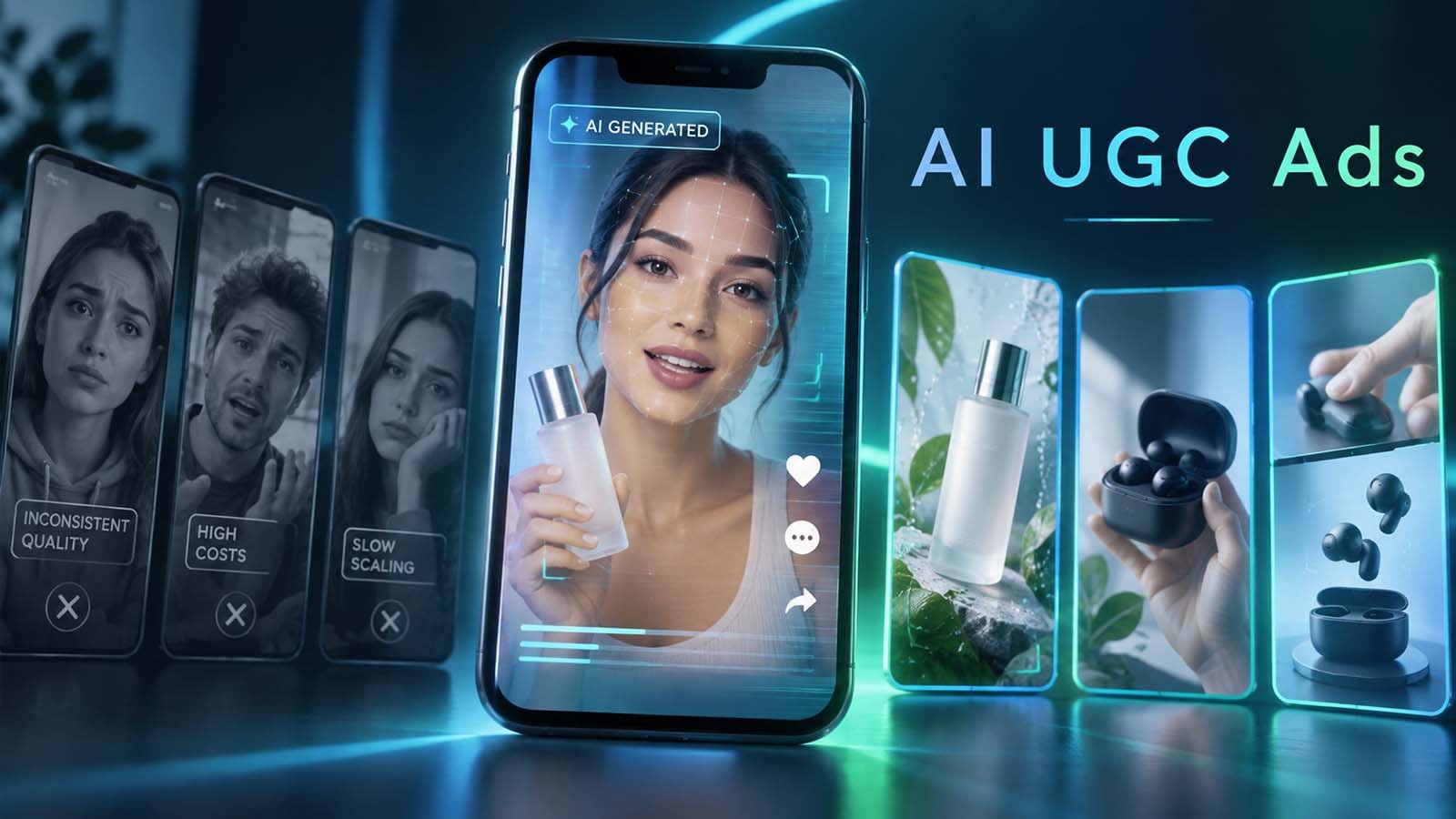
AI UGC ads imitate creator-style phone footage using a generated or synthesised presenter instead of a real person. They work for simple physical products with an obvious visual benefit, and they underperform real creators wherever trust, expertise or genuine reaction is the selling mechanism. Where a viewer could take the presenter for a real endorser, disclosure is required and, in several markets, legally mandated.
Key facts
- What it is: creator-style vertical video where the presenter is generated or synthesised rather than filmed
- Works for: simple physical products with a visible, demonstrable benefit
- Fails for: anything sold on trust, expertise, before-and-after results, or genuine reaction
- Disclosure: required wherever a viewer could reasonably believe the presenter is a real person endorsing the product
- Never do: a synthetic likeness of a real person without their written permission
- The honest alternative: animated or product-led short-form, which makes no claim to be a person at all
On this page
The format, described honestly
UGC advertising works because it does not look like advertising. Handheld framing, a room that is clearly somebody's room, a voice that is not a voice artist. The viewer's guard is down because the signals say peer, not brand.
AI UGC ads reproduce those signals with a generated presenter. Everything that made the format cheap, no studio, no crew, no lighting, becomes cheaper again, and the creator booking disappears entirely.
That is the appeal, and it is real. It is worth being equally clear about what is being borrowed. The format's persuasive power comes from an implied claim: a real person used this and is telling you about it. When the person is generated, that implication is still doing the selling, and it is no longer true. Everything else in this article follows from that one fact.
Where it works
The format holds up when the persuasion is carried by what is shown rather than who is showing it.
- A cleaning product visibly removing a stain.
- A gadget doing the thing it is for, in three seconds.
- An unboxing where the object, not the reaction, is the content.
- A simple assembly or setup demonstration.
- Any product where the benefit is legible on screen without being asserted.
In these cases the presenter is essentially a frame around a demonstration. If the demonstration is genuine, the ad is doing honest work.
Where it fails
| Category | Why the format underperforms |
|---|---|
| Skincare, supplements, fitness | Sold on before-and-after and on believing a real body. A generated result is not evidence |
| Financial products, insurance | Sold on trust and authority. Synthetic delivery reads as a red flag |
| Professional and B2B services | The audience is small, informed and unusually good at detecting it |
| Anything trading on genuine reaction | The reaction is the product. It cannot be generated |
| Medical or health claims | Regulated, and a synthetic endorser compounds the problem |
There is also a broader risk that does not show up in one campaign's numbers. Audiences are getting faster at recognising synthetic presenters. An ad that is spotted does not merely fail to convert, it attaches a specific impression to the brand, and that impression is hard to remove. Categories where trust is the whole purchase are the wrong place to test a format's tolerance.
The rules that actually apply
Three lines that should not be crossed, independent of any jurisdiction's current wording.
Never generate a real person's likeness without written permission. Not a customer, not a public figure, not a competitor's founder. Your own founder, with their agreement, is the only safe case, and it should still be disclosed.
Never present a generated testimonial as a real customer's experience. A synthetic person describing a result they did not have is a fabricated testimonial regardless of how it was produced.
Disclose where the viewer could be misled. If someone could reasonably finish the video believing they watched a real person endorse a product, the ad needs to say otherwise, clearly enough to be read at the speed people watch.
Rules on synthetic media in advertising are moving quickly and differ by market. Treat the three lines above as the floor and confirm the current legal position for each market you advertise in with your own legal advisers. Lucid Motion Studio produces the creative; the advertiser owns the claims and the compliance sign-off.
Illustrative scenario, not a specific client. A homeware brand wants thirty pieces of vertical creative a month and cannot book thirty creators. The set that ships: twenty product-led verticals with voiceover and on-screen text and no presenter at all, plus ten featuring a clearly stylised animated character that nobody could mistake for a real person. Conversion holds, because the products demonstrate well on camera, and no disclosure question arises because nothing in the set claims to be a person's genuine experience. The brand keeps a small budget for real creators in the one category where testimony matters.
The alternative most brands should consider first
Strip the presenter out.
A vertical video that opens on the product doing something interesting, carries on-screen text and a voiceover, and never pretends to be anyone's bedroom, has most of the format's advantages and none of its problems. It is fast to produce, it is trivially variant-able, it suits every placement, and it makes no claim it cannot support.
In practice, for physical products with a visible benefit, this format often gets to the demonstration faster than a UGC-style opening does, because it skips the fifteen words of setup a presenter needs before showing anything.
Where a human presence genuinely helps, an obviously stylised animated character is the honest middle: it carries warmth and personality, and no viewer will take it for a real endorser. That is the approach covered in short-form video for brands, and it draws on the same AI-powered production pipeline without borrowing anybody's credibility.
If you do run AI UGC
- Build a character sheet first, so the same presenter appears across the set.
An inconsistent face is both a quality problem and a credibility one.
- Keep claims in on-screen text, not in the presenter's mouth, so what is being
asserted is reviewable.
- Disclose prominently and early, not in a caption nobody expands.
- Test against a no-presenter variant of the same concept. In a surprising
number of categories the plain product version wins, which settles the question without a debate.
The summary
AI UGC ads are a real format with a narrow honest use: simple products whose benefit is visible, with clear disclosure. Outside that, the thing being borrowed is credibility rather than production value, and credibility borrowed from a person who does not exist is the most expensive thing on the invoice.
If you want short-form creative at volume without that problem, send us the brief. Fixed price back within 24 hours, over email, no call required.